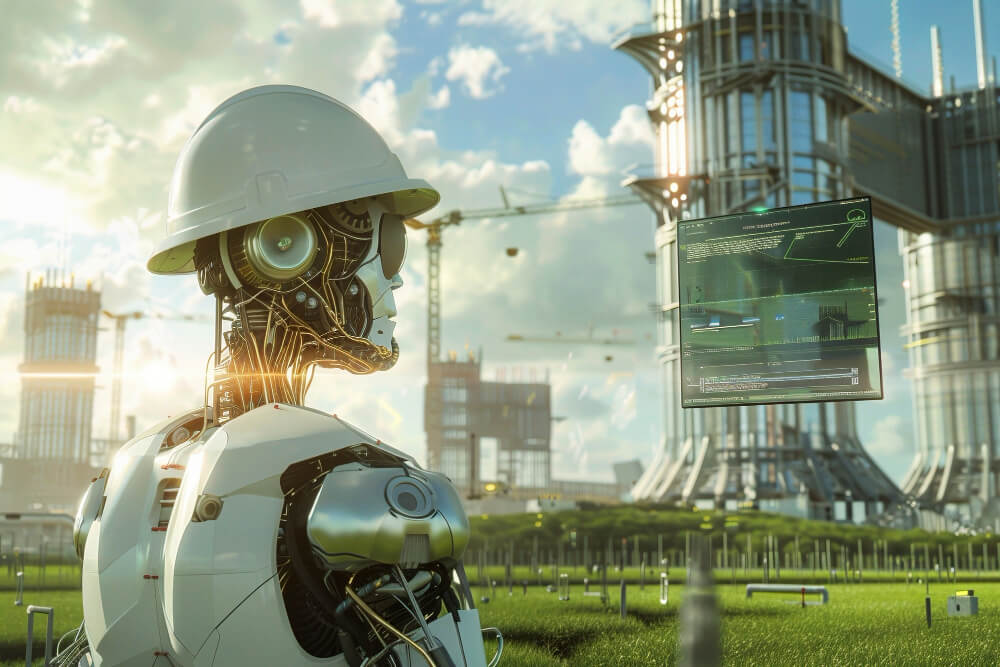
AI and robotics will transform our lives and profession, where what one considered science fiction today becomes every day. From Smartphones, Smart Homes, and GPS to Driverless cars and Surgical robots, the implementation of these technologies allows us to do many tasks faster, safer, and more effectively.
Worldwide companies are making large capital expenditures in AI and robotics because they allow companies to be more productive, cost-effective, and solve complex problems, as technology continues to advance and become more prevalent in nearly all sectors of the economy. Every sector has much to gain from the use of AI and Robotics to create opportunities for innovation and growth, including Health Care, Education, Manufacturing, Agriculture, and Finance.
This blog will address areas in which AI and Robotics are impacting industries with the potential to shape the future of their industries while benefiting those involved in the workforce and the educational system.
Understanding AI and Robotics
Artificial Intelligence refers to software that can perform functions that were once believed to require human intelligence (the ability to think), including learning through experience, analysing data, making decisions, finding solutions to problems, and understanding language, among other things. Robotics is an engineering sub-discipline that deals with designing/building robots and automated machines to do physical tasks, usually with minimal or no assistance from humans (i.e., robots can perform physical tasks without any help from people).
Robots are now much more intelligent than ever, thanks to the combination of robotics and AI technology. Robots equipped with both AI and robotics technologies can assess their environment, learn from their previous behaviours, and perform physical tasks with a higher level of accuracy than traditional automated systems. This combination of technologies is providing an incredible opportunity for further advancement in technology.
AI and Robotics in Healthcare
AI and robotics are two of the most promising industries to gain by utilizing automated technologies. From hospitals to clinics, these technologies are helping to provide better patient care and increase the accuracy of medical diagnoses.
An example of AI-enabled tools that provide assistance to physicians is AI’s ability to help physicians process patient information from medical reports to early detection of disease to developing a treatment plan.
Surgeons are also using robotic systems to assist them during complex surgeries. Robotic systems can help surgeons by allowing for increased precision in surgery, while at the same time decreasing the amount of time patients spend in recovery.
In the future, AI’s ability to support virtual assistants will enable them to monitor patients from a distance, while robots will be able to assist caregivers in providing assistance to the elderly with basic daily living activities. Overall, advances in these technologies will help to improve access to healthcare and help ease the demands placed on healthcare providers as they provide high-quality patient care.
Transforming Manufacturing
Industry sectors have employed robots since the 1990s and robots are now becoming more advanced and capable of performing more tasks than ever before.
New generation smart robots can perform many inspection tasks as well as detect product defects and forecast equipment failures with an objective of creating better and more reliable products with significantly fewer waste products than traditional production methods.
Factory automation technology is advancing rapidly and is being integrated with all aspects of manufacturing to provide a very high level of efficiency and quality in factories of the future; all equipment, robots, and workers will be connected through the Internet and communicate instantaneously. This will enable the production of products faster than ever before, while continuing to meet the highest quality standards.
The Future of AI in Education
AI is also helping to make education more individualized. Learning platforms can use data to determine what a student is good at and what they need to work on to provide them with individualized lessons and practice materials.
Teachers can also take advantage of AI-enabled tools to help them automatically grade assignments and generate content for their class, as well as track student performance and academic progress. Robotics has also made it possible for students who are involved in a classroom setting to learn more effectively. Through hands-on activities, students will be able to gain knowledge about programming, engineering, and problem-solving.
Students who desire to have technical abilities and successfully enter the ever-growing field of tech are searching for the Top AI & Robotics Colleges in India.
Revolutionizing Agriculture
Artificial intelligence tools and robotic devices are making farming more high-tech than ever before.
The use of AI enables farmers to get better information about the weather, as well as learn how healthy their crops are, identify pests, and know when to irrigate or harvest their crops. Robots are also being developed to plant seeds, apply fertilizer, and harvest crops with much greater efficiency.
The result is an increase in crop output, compared to traditional methods, but at lower levels of water consumption, labour expenditure, and negative environmental consequences.
AI and Robotics in Finance
AI is being used by banking institutions to continue providing better service with security.
AI-based automated customer support via chatbots works 24/7 and intelligent detection through AI responds to fraudulent activities within seconds. Additionally, banks and financial institutions utilize AI’s ability to identify and track market activities, assess risk, and provide individual customers with personalized financial recommendations, assessments, and advice.
Automation provides faster and more accurate processing of numerous records with banks and understanding the time-sensitive nature of certain actions than traditional methods.
Changing the Retail Industry
AI is changing the way retailers provide a superior customer experience. An example of this includes online storefronts using data-driven decisions to recommend items based on past purchasing behavior and user preferences.
AI is also being used by retailers to efficiently manage inventory, give accurate predictions for future needs and assist with creating effective pricing strategies.
There is now an increased use of robots in the warehouse environment (sorting, packing and moving items) as well as robotic assistants located within some store environments, with the ability to assist shoppers and answer any general questions they may have.
These technologies help retailers improve their operational efficiencies while also being able to provide faster, personalized services for their customers.
AI in Transportation and Logistics
Transportation technology is changing drastically because of artificial intelligence technology and robot technology.
More and more self-driving cars/vehicles, intelligent traffic management systems, and automated delivery robots are being used. Companies in the logistics field use artificial intelligence (AI) to find the best delivery routes, decrease fuel consumption, and increase their overall supply chain efficiency.
Warehouses that use robots can process thousands of packages per day quickly and accurately, allowing for faster delivery to customers.
Smart Cities and Public Services
Artificial Intelligence (AI) and robotics are being implemented by government to make cities better places to live.
AI-based applications are managing traffic lights, monitoring safety in public places, optimizing energy use, and helping to manage waste. Robots can also assist in disaster response, inspecting infrastructure, or performing dangers-to-human safety jobs.
As smart cities continue to expand their benefits to citizens, transportation and mobility options, healthcare, education, and public services will be improved; cities will become more efficient and sustainable.
AI in Entertainment and Media
AI Technologies Help the Entertainment Sector
By utilizing AI technologies, the entertainment industry has many advantages. For example, streaming services use AI systems to recommend movies and songs based on users’ preferences. In addition, visual effects are created, edited, and personalized using AI.
Robotics has applications in films; live events; and amusement park attractions by providing customers with enhanced experiences through interactive robots.
As technology continues to improve, customers will see even more immersive entertainment options personalized for their individual needs.
Career Opportunities in AI and Robotics
The rapid adoption of AI and robotics is creating exciting career opportunities across industries.
Some of the most in-demand roles include:
- AI Engineer
- Robotics Engineer
- Machine Learning Engineer
- Data Scientist
- Computer Vision Engineer
- Automation Engineer
- Robotics Programmer
- AI Research Scientist
- Software Developer
- AI Product Manager
Professionals with expertise in these fields are expected to remain highly valuable as organizations continue investing in advanced technologies.
Challenges That Need Attention
While automating tasks has its benefits, there are various obstacles in this new age. Data privacy issues are an ongoing concern as AI systems rely on huge data sets to perform tasks. Companies need to address cyber security concerns related to their data or sensitive information will be compromised.
Job loss due to AI and automation is yet another obstacle; as more jobs become automated, skill development and ongoing learning must become essential.
Finally, businesses and governments also have an ethical responsibility to create AI systems that are transparent, equitable and free from harm.
What the Future Looks Like
AI and robotics show a bright future ahead! These technologies will grow in intelligence, price and accessibility, allowing businesses (of all sizes) to benefit from automating their workflows and using data to make informed decisions.
AI and robots aren’t going to fully replace people; rather, they’ll be used with human beings to accomplish repetitive tasks, freeing up humans to spend their time thinking creatively, innovating, and making strategic decisions.
The adoption of smarter solutions by the diverse range of industries will continue to improve productivity and provide better customer experiences, while more efficiently providing solutions to real-world problems.
Also Know:
Conclusion
Artificial Intelligence (AI) and robotics have transitioned from envisioned future technologies to active implementations that are having profound impacts on businesses and industries across the world. Industries such as healthcare, education, manufacturing, agriculture, financial services, transportation, and retail are all experiencing rapid innovation with continued growth year after year.
Organizations that choose to leverage AI and robotics to do their work will position themselves to compete in an increasingly digital environment. Individuals who develop skills in this area will have access to many exciting career opportunities within one of the largest projected growth technology markets.
As AI and robotics changes how individuals and organizations work, learn, and live, these technologies will create smarter businesses, stronger economies and a future filled with possibilities.

Our aim is to chase the future, innovations, and the latest trends of all things tech. We love to interact with industry experts, understand their diverse and unique perspectives, and spread their ideas.




![How to Update and Reinstall Keyboard Drivers on Windows 10/11 [A Guide]](https://wpcontent.totheverge.com/totheverge/wp-content/uploads/2023/06/05062841/How-to-Update-and-Re-install-Keyyboard-Drivers-on-Windows-10.jpg)