It’s no secret that the digital world has developed faster than ever, and emerging technologies are at the heart of how creativity is constructed and consumed. Where digital creativity once was confined within the realm of design tools and traditional software, it has now expanded into immersive experiences, AI-aided creations, and interactive media that have pushed the limits of what is thought to be possible. Along with new tools that give creators more advanced technology than ever, the way audiences respond to and interact with their content is constantly evolving, making creativity more dynamic, collaborative and accessible at a level we’ve never seen before, and for those willing to share their knowledge, they can also write for us technology.
Artificial Intelligence and Creative Innovation
Artificial intelligence (AI) has possibly surfaced as the most disruptive force in digital creativity. AI-enabled tools are capable of creating elaborate images, musical works and written compositions in ways such as VPN for PC that were once thought unattainable. As a case in point, AI employs algorithms to study massive databases of different art pieces and styles, and then either mimic the most popular styles or come up with entirely new ones. When it comes to music, “AI can create” sequences of harmonies and rhythms that match the overall feeling or genre. Such technologies empower artists to do quick brainstorming of ideas, going beyond the norms to come up with the most innovative solutions and even get rid of the limitations of the tools that initially restrict the potential of creativity. AI is not a substitute for human creativity; rather, it is a tool that allows us to do more and presents an abundant source of inspiration that can be used to mould creative ideas.
Virtual and Augmented Reality: Immersive Experiences
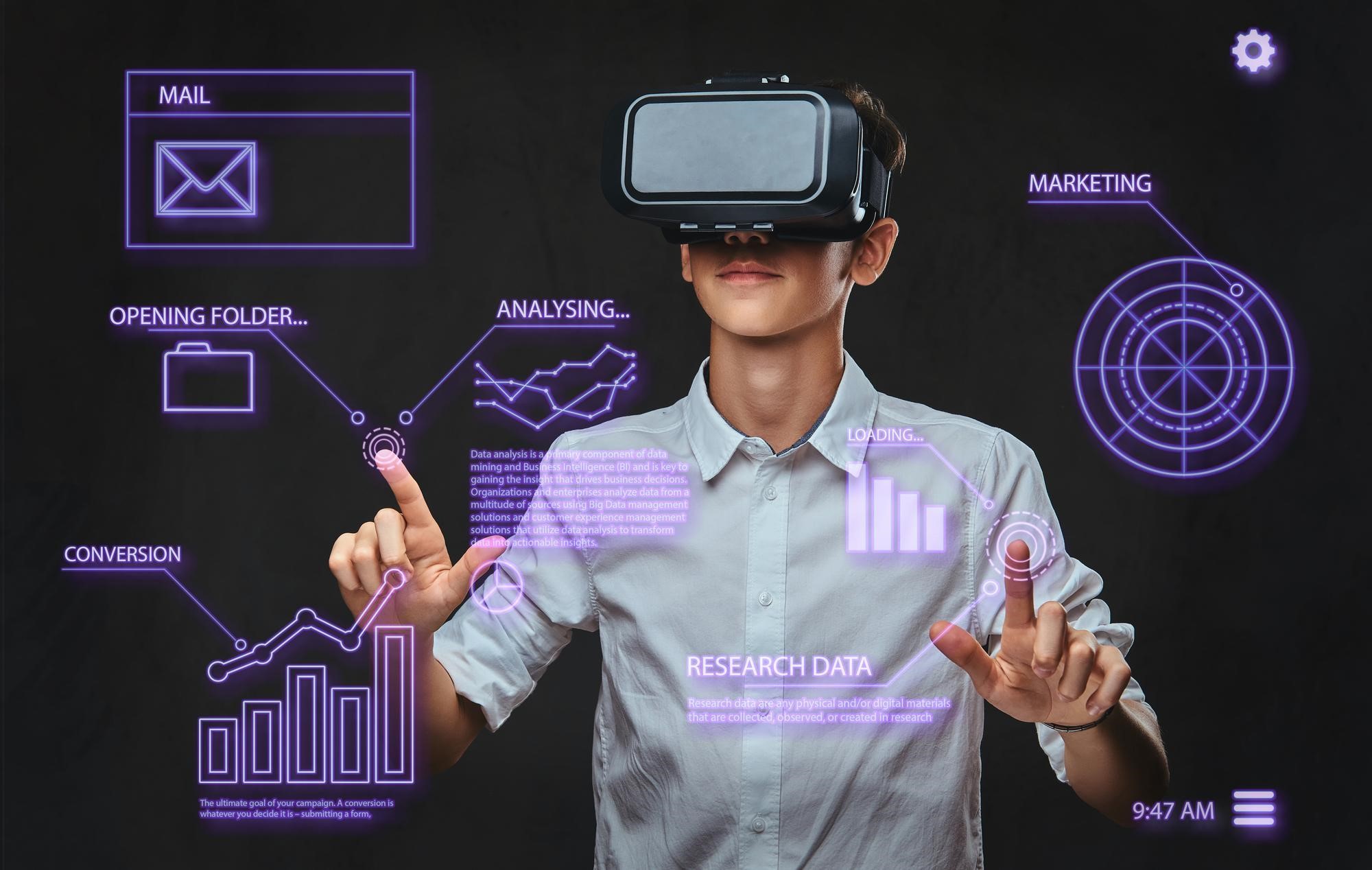
Also, VR and AR are changing the way we think about storytelling, architecture, and design in a digital world. With VR, users can enter fully immersive worlds, allowing creators to create experiences that lie beyond the capabilities of a screen or physical media. Augmented reality, however, superimposes digital information on the real world, enabling interactive experiences that combine reality with imagination. These technologies can play a substantial role in gaming, education, marketing and art. Designers and artists can make interactive installations or simulations that react to the actions of users, making the audience a participant instead of an observer. Yet this degree of immersion is creating new hurdles for traditional creativity and pushing new boundaries in how content can be conceived.
Cloud Computing and Collaborative Creativity
Cloud computing made it possible for creative teams to collaborate in real-time across various geographies. Digital cloud-based tools allow multiple creatives to collaboratively build a single project at the same time, ensuring real-time feedback and versioning as well as easier integration of assets between participants. It breaks down the barriers of geography and infrastructure, allowing creativity to flow more freely and effectively. Additionally, cloud-enabled all its focus tends to have built-in AI or analytics tools that offer content makers visibility into patterns of consumption, audience involvement and performance metrics. The advent of cloud computing, as well as a multitude of digital tools that are available to aspiring creatives have allowed access to high-quality creative resources around the globe, so that independent artists and small studios can stand shoulder-to-shoulder with larger organisations.
3D Printing and the Tangible Side of Digital Creativity
Emerging technologies like 3D printing also bridge the gap between digital creativity and physical outputs, even though digital creativity commonly refers to work that is produced using screens and virtual worlds. Becoming for artists, designers and engineers in record precision, where people can transform the digital models into tangible objects. This tech enables experimentation in styles, materials, and structures that were previously too impractical or impossible to produce. From rapid prototyping to innovative product designs, digital creators can leverage 3D printing as part of their new creative work process and deliver tailored experiences for niche markets. It will also enable artistic and commercial creation in writing, art, VR sculptures, and curators and galleries all over the world.
The Role of Gaming Engines in Creative Development
The use of gaming engines like Unity and Unreal Engine, which were originally developed specifically for the purpose of developing games, has grown beyond that and has become essential tools for digital creativity across a variety of domains. These engines give creators high-end rendering capabilities, realistic physics simulations, and interactive scripting able to produce everything from virtual production (the LED walls you see at so many productions) to architectural visualisation and interactive media. For example, filmmakers have adopted these engines to pre-visualise scenes and build virtual sets, enabling a lower-cost production while enhancing visual storytelling. Designers are able to recreate even the most complicated environments or user interactions, allowing them to test concepts in ways that typical software can’t. The rise of gaming engines available to all means the barriers to entry for playing fields have been levelled with talent and time now chosen over budgets, independent creators can put out content that once would never make it outside a large studio.
AI-Driven Personalisation and Audience Engagement
Emerging technologies are also changing the way digital creativity engages audiences. As AI and data analytics allow creators to personalise content, it provides ultra-tailored experiences for those consuming the input. From interactive video content that evolves depending on user actions to AI-art recommendations in designer platforms, tech is enabling creators to analyse and predict audience behaviour. Such personalisation boosts engagement, fosters deeper interaction and lets creators experiment with the formats that are more relevant and impactful. As a result, digital creativity is not just about creating content anymore; it’s all about personal experiences.
Ethical Considerations and Responsible Innovation
With new technologies come new forms of digital creativity, and with them, ethical considerations. Generative, deepfake and immersive media content have implications for issues like authenticity of creative works (Are these actors? Are they real?), copyright and social impact (Did you choose to see this?) that are not going to help mainstream media organisations convince society of any traditional hierarchy between one product or another in the creative industry. Creators and technologists must take the long road here, avoiding hitting speed bumps along the way, none of this golden innovation at a human cost type of stuff. Such as transparency, consent and inclusivity that were clarified to be adequate in creating a creative environment for not only creators but also audiences. Outside of trust, responsible use of technology fuels innovation that is sustainable and socially aware.
The Future of Digital Creativity
The bridge between innovation and digital creative fields is still in development, with infinite possibilities within its realm. Expect the creative landscape to keep expanding as AI gets more sophisticated, VR and AR devices get more immersive, and cloud-based platforms become increasingly integrated. There is no telling what the future holds, but we expect new categorisations of storytelling experiences, from interactive narratives to hyper-personalisation and cross-platform amalgamating where art meets technology meets audience. Building an inclusive digital creative ecosystem. Importantly, with the expanding array of technologies this toolkit offers, a wider spectrum of creators is empowered to contribute their voices to it.
To conclude, the continuous evolution of new technologies is not just digital creativity tools but also a transformative phenomenon reshaping the possible. Creators can use a mix of these technologies, AI, VR/AR, cloud computing, 3D printing and more, to discover untapped spaces, build experiences previously thought impossible and create deeper connections with audiences. A new era of creativity that blends the unique qualities of human imagination with sophisticated technology is upon us, ushering in a limitless future.



![How to Update and Reinstall Keyboard Drivers on Windows 10/11 [A Guide]](https://wpcontent.totheverge.com/totheverge/wp-content/uploads/2023/06/05062841/How-to-Update-and-Re-install-Keyyboard-Drivers-on-Windows-10.jpg)